Distributed Automation Systems
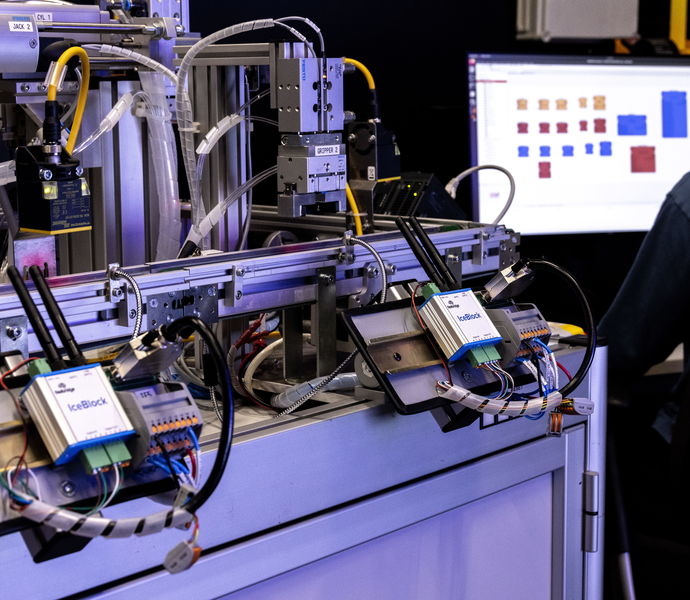
In discrete manufacturing and logistics, distributed automation systems are revolutionizing operations. This project developed a reconfigurable automated assembly system with decentralized automation, 5G wireless communication, and smart energy measures. Using IEC 61499 technology and digital twins, we executed change-on-the-fly experiments, proving plug-and-play capabilities by seamlessly swapping Festo CP-Lab modules and reconfiguring them in real-time. Additionally, the EnAS demonstrator integrated smart energy management, enabling efficient power supply and storage solutions with data-driven control.
Gas & Oil Processing
In the oil and gas sector, a Lighthouse project highlights how virtual commissioning and software-defined automation can revolutionize industrial automation. By leveraging Universal Automation Organization (UAO) principles and IEC 61499, the project enables vendor-agnostic interoperability and digital system simulation. This approach eliminates costly physical prototypes, accelerates deployment, and delivers scalable, flexible solutions for process and manufacturing industries. By adopting an Open Automation approach, companies can achieve cost reductions of 30-50% and unlock vast long-term savings.

System Integrators Collaboration
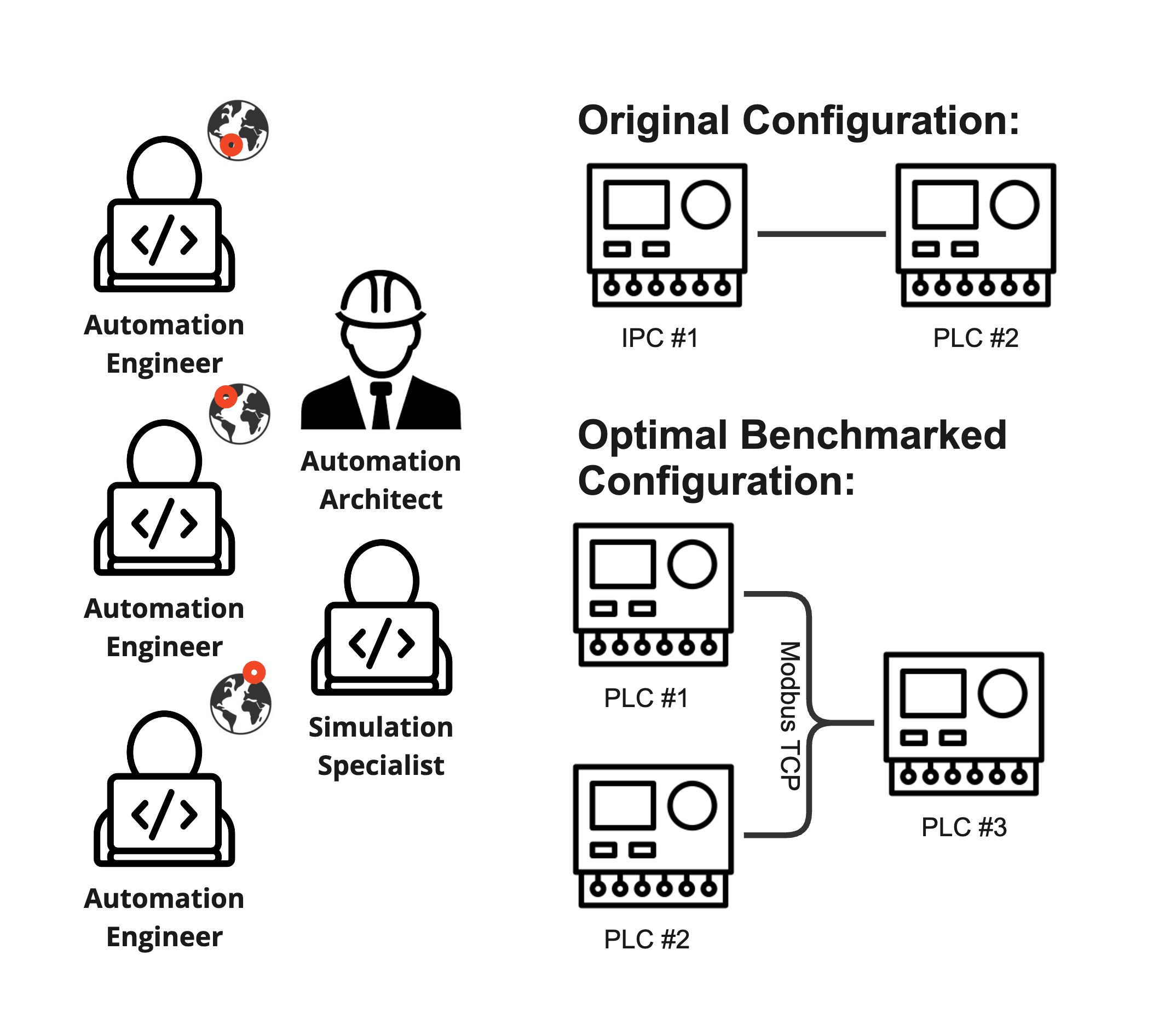
By recreating full device configurations in the cloud that are remotely accessible to all teams, SIs can detect issues before the plant is built, run hardware-accurate logic simulations (I/O-specific, identical performance, with complex fieldbus network simulated), and benchmark architectures to pick the optimal device configuration. Distributed teams (e.g. when the machine logic, safety system, and DCS are located across countries) can collaborate in one environment, cutting travel and compressing schedules via parallel engineering. Automated, natural-language test suites enable repeatable FAT/SAT, regression testing, and traceable compliance. The result: fewer physical prototypes, accelerated commissioning, vendor-agnostic flexibility, and significant reductions in cost and risk.
Target group benefits
Solution Integrators:
- Software-driven development makes servicing brown-field systems effective;
- There is no need to train for each propietary supported vendor;
- End-of-life-proof software solutions and software pieces can be reused between projects in a vendor-agnostic way.
End-Users:
- Using the vendor-agnostic performance benchmarking tool it is possible to build optimal device configuration;
- Get rid of the vendor-lock situation, choose the best hardware and software that fits the case individually, and avoid vendor supply disruptions.
Vendors:
- Reduce the resources spent on creating unique, proprietary ecosystems for every product generation;
- Appeal to a wider range of customers who prefer flexibility over proprietary lock-in;
- Become early adopter instead of missing the inevitable Open Automation trend.
It is estimated that complete integration of Open Automation principles together with CloViC may bring up to 50% cost reduction for the End-User in the long run.
 CloViC - Cloud Virtual Commissioning